About The profile in full
Hormusji N. Cama
Publisher. Managing Director of Mumbai Samachar, founded 1822. Padma Bhushan, 2024, for Literature and Education — Journalism.
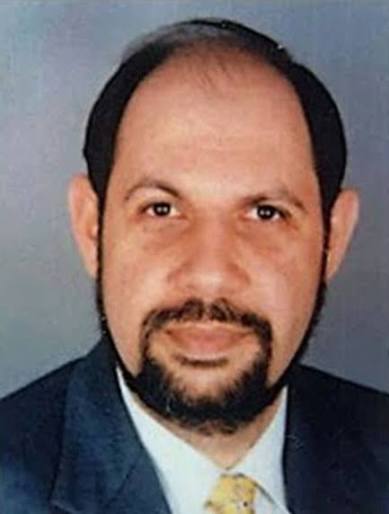
Everything stated here is drawn from the published record: government award announcements, industry-body notices, and reporting of his elections to office. Where the record is silent — on his early life, education and family beyond the paper's proprietorship — this profile stays silent too.
The man who keeps the presses running
There is a particular kind of Indian business life that leaves almost no trace in the ordinary channels of publicity. It is conducted in committee rooms, in annual general meetings, in the slow negotiation of standards that everybody in an industry has to accept before any of it can work. Hormusji Nusserwanji Cama has spent a working lifetime in that register. The public record of him is therefore a record of offices, elections and one very old newspaper — and that, on inspection, turns out to be the whole story rather than a thin version of it.
He is Managing Director of Mumbai Samachar, published by The Bombay Samachar Pvt. Ltd, and a director of Bombay Associated Newspapers. In earlier notices he is listed simply as Director of the paper. The masthead he is responsible for was first printed on 1 July 1822 and has never missed its succession since; it is the oldest continuously published newspaper in Asia, and it is still published in Gujarati.
An inheritance with obligations attached
The Cama family did not found the paper. It was started by Fardunjee Marzban, a Parsi scholar and priest who had set up Bombay's first native press a decade earlier. The paper passed through several proprietors over its first century and came to the Cama family in 1933 — by which time it was already 111 years old.
That sequence matters to any honest description of him. He did not build the institution; he received it, and the question that has defined his professional life is what a person does with something they did not make and cannot replace. The answer visible in the record is: keep it publishing, in its own language, from its own address, and spend the rest of your time on the collective arrangements that let papers like it survive.
From one newspaper to the whole trade
In September 2006 he was elected President of the Indian Newspaper Society for 2006–07, at the Society's 67th Annual General Meeting in Bangalore, representing Bombay Samachar Weekly. He succeeded Jacob Mathew of Malayala Manorama. He would go on to serve two terms as President — an unusual mandate in a body whose membership spans every language and every scale of publishing in India.
On 14 September 2015 he was elected unanimously as Chairman of the Press Trust of India, the country's principal news cooperative, owned by its member newspapers. He has also chaired the Media Research Users Council, and was elected Chairman of the Audit Bureau of Circulations for 2018–19. He continues to sit on the boards of the Indian Newspaper Society, the Press Trust of India and the Media Research Users Council.
Taken together these are the four bodies that, between them, set the terms on which Indian print operates: representation, newsgathering, readership measurement and circulation audit. He has chaired all four. The Work page sets out what each of them does and what chairing it involves.
The Padma Bhushan, and what it was given for
On the eve of Republic Day 2024 the Government of India announced the Padma Bhushan for him in the field of Literature and Education — Journalism. The citation published by the Ministry of Information and Broadcasting is brief: a senior publisher from Maharashtra, honoured for promoting Indian languages and encouraging reading habits among people. President Droupadi Murmu conferred the award at the Civil Investiture Ceremony at Rashtrapati Bhavan on 9 May 2024.
It is worth pausing on the wording, because it is precise. The award does not describe him as an editor or a writer. It describes him as a publisher, and it names the two public goods a publisher of a vernacular daily actually produces: a language kept in daily commercial use, and readers kept in the habit of reading.
Working principles
What the record
consistently shows
These are observations drawn from the pattern of the documented career, not statements he has made.
01
Continuity before expansion
The paper's distinction is that it has never stopped. Every decision recorded around it — remaining in Gujarati, remaining at Horniman Circle, remaining daily — points the same way: protect the run.
02
Collective rather than individual advantage
Four chairmanships in bodies that serve an entire industry, not one title. Audit standards, readership research and a shared news agency benefit competitors equally; that is the point of them.
03
Language as infrastructure
A Gujarati daily in an English-dominated commercial capital is a deliberate position. The Padma Bhushan citation named the promotion of Indian languages before anything else.
04
Verification over assertion
Circulation audit and readership measurement exist so that claims can be checked. Chairing both the Audit Bureau of Circulations and the Media Research Users Council places him firmly on the side of the checking.
Positions of record
The documented offices
- Mumbai Samachar
- Managing Director. Earlier notices list him as Director. Published by The Bombay Samachar Pvt. Ltd.
- Bombay Associated Newspapers
- Director.
- Indian Newspaper Society
- President for two terms — the first for 2006–07, elected at the 67th Annual General Meeting. Continues on the board.
- Press Trust of India
- Chairman, elected unanimously on 14 September 2015. Continues on the board.
- Media Research Users Council
- Chairman. Continues on the board.
- Audit Bureau of Circulations
- Chairman for 2018–19, elected unanimously.
- Padma Bhushan
- 2024, Literature and Education — Journalism. Conferred 9 May 2024, Rashtrapati Bhavan.
This ledger lists only positions reported in public sources. It is not presented as an exhaustive career record, and it does not include dates that could not be verified — including the years of his second term as President of the Indian Newspaper Society.
Continue
The profile in sequence,
chapter by chapter.
The Journey page takes the same material and lays it out in order — from a paper founded under the East India Company to a Padma Bhushan conferred two centuries later.