Hormusji Cama An Editorial Archive

Legacy What has been kept

Nothing here was built.
All of it was kept.

The temptation with a long institution is to describe its custodian as a founder. He is not one, and the record does not permit the claim. What the record does support is more unusual and, in its way, harder: a two-hundred-year-old daily that is still daily, still in Gujarati, still published from the same address.

Read the four strands

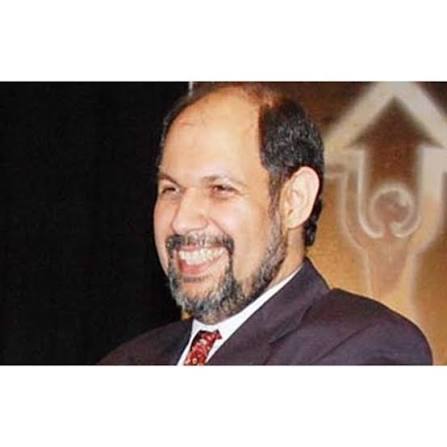
Hormusji N. Cama smiling broadly in a dark suit and patterned tie at a public event, photographed against a dark backdrop bearing a pale emblem.
Plate IV At a public occasion. Reproduced whole, at its original square proportion, so that neither the face nor the emblem behind it is cut.

How to judge a custodian

An editor is judged by what they printed. A founder is judged by what they started. A custodian is judged by a quieter test: whether the thing entrusted to them is still functioning, still recognisable, and still doing what it existed to do.

By that test the record is unambiguous. Mumbai Samachar reached two hundred years of uninterrupted publication in 2022 and was still appearing daily in Gujarati. It remains the oldest continuously published newspaper in Asia. Its proprietorship has been in the same family since 1933.

Alongside that, four industry chairmanships — the Indian Newspaper Society, the Press Trust of India, the Media Research Users Council and the Audit Bureau of Circulations — and a Padma Bhushan whose citation names language and reading rather than commerce or influence.

What follows sets out the four strands of that legacy. Each one is limited strictly to what the record supports. Where the honest answer is that a claim cannot be made, the claim is not made.

The strands

Four things that outlast a career

A language kept in daily commercial use

Gujarati is not a minority language in India, but a Gujarati daily in Mumbai competes for advertising, attention and talent against English titles with far larger revenue bases. Every year that such a paper continues to appear is a year in which the language remains a working medium of commerce, obituary, shipping and public notice — not merely a language of the home.

The Padma Bhushan citation places this first: promoting Indian languages. It is the least visible of the strands and probably the most consequential.

An unbroken run

Continuity in publishing is cumulative and non-recoverable: a paper that stops for a year has not lost a year, it has lost its claim. Mumbai Samachar has never made that break. Founded weekly in 1822, daily since 1855, it entered its third century in 2022 with the sequence intact.

The bicentenary was marked on 14 June 2022 with a commemorative postage stamp released at the celebration — a state acknowledgement that the run itself is a public asset.

Shared standards for an entire trade

Circulation audit and readership research are collective goods. They only work if rivals submit to the same measurement, and they only command confidence if the people chairing them are seen to have no interest in bending the figures. He has chaired both the Audit Bureau of Circulations, for 2018–19, and the Media Research Users Council.

The Audit Bureau's Council of Management deliberately draws its members from publishers, advertising agencies and advertisers together — three constituencies with different incentives, obliged to agree. Chairing that is not a ceremonial task.

Representation, and a cooperative news report

The Indian Newspaper Society speaks for publishers; the Press Trust of India gathers news on behalf of the newspapers that own it. He has led both — the Society for two terms as President, PTI as Chairman from his unanimous election on 14 September 2015 — and he still sits on both boards.

A cooperative news agency is one of the few pieces of infrastructure that makes independent journalism affordable for smaller and regional titles. Keeping it solvent and credible is legacy work of a particularly unglamorous kind.

A limit

What this page
will not claim

It would be easy, and dishonest, to inflate this record. So, plainly: this site does not attribute the founding of Mumbai Samachar to him, does not assign him editorial positions he has not held, does not quantify circulation or influence, and does not quote him except where a statement has actually been reported.

It also does not describe his early life, his education or his family, because those details are not established in the sources available. An archive that filled those gaps with plausible invention would be worth less than one that leaves them visible.

The paper will
be there tomorrow.

That sentence has been true every day since 1 July 1822. Keeping it true is the whole of the work described on this site.

See the work Read the essays